






Milling is one of the most important machining operations in CNC manufacturing. While creating a milling toolpath in Mastercam, two major cutting methods are used: Climb Milling and Conventional Milling. Understanding these methods is a core concept taught in professional Mastercam training in Chennai, Coimbatore, and Hosur for aspiring CNC programmers.
Choosing the correct milling strategy helps improve surface finish, increase tool life, and reduce overall machining time—skills every student learns in a reputed Mastercam training center in Chennai, Coimbatore and Hosur. In this blog, we clearly explain the difference between climb milling and conventional milling, their advantages, disadvantages, and when to use each method—exactly the type of practical knowledge covered in industry-oriented Mastercam training near me programs.
What is Climb Milling?
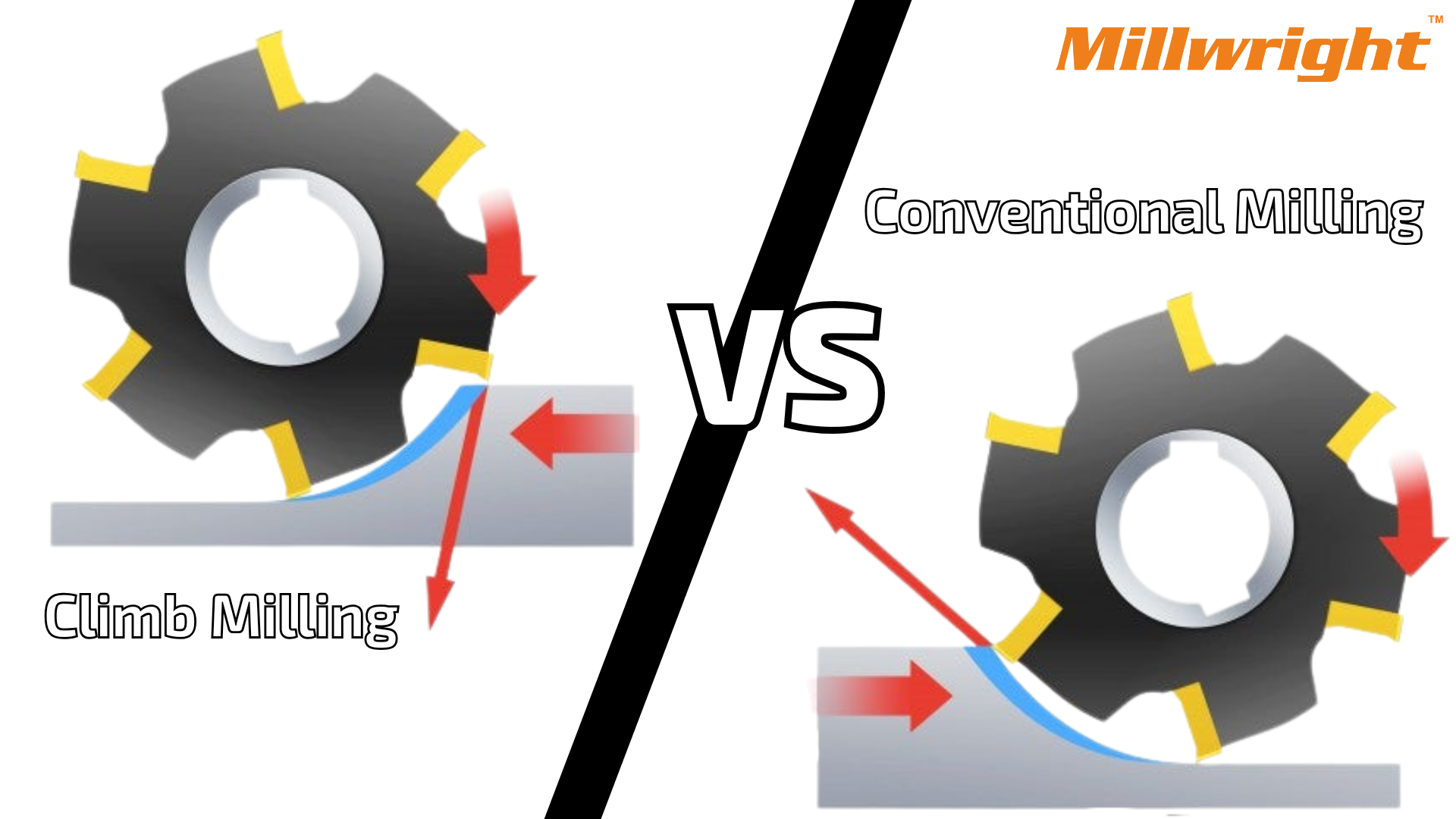
Climb milling (also called Down Milling) is a method where the cutter rotates in the same direction as the feed of the workpiece. This method is widely recommended in modern CNC machining not only but also CAM software like Mastercam.
✔ Tool Rotation: Clockwise
✔ Feed Direction: Same as cutting rotation
✔ Chip Formation: Thick → Thin
In climb milling, cutting starts with the maximum chip thickness and also gradually reduces to zero.
Advantages of Climb Milling
- Better surface finish
- Lower tool wear
- Reduced heat generation
- Less chance of chip re-cutting
- More accurate dimensions
- Ideal for CNC machines with minimal backlash
This technique is strongly emphasized in advanced Mastercam training in Chennai and Mastercam CAM programming courses.
Disadvantages
- Not suitable for old/manual machines with backlash
- Requires rigid setup and strong fixturing
- Cutting forces tend to pull the workpiece
Best For
- CNC milling machines
- High-speed machining
- Aluminum, mild steel, stainless steel
- High-accuracy finishing operations
What is Conventional Milling?
Conventional milling (also called Up Milling) is where the cutter rotates opposite to the feed direction of the workpiece.
✔ Tool Rotation: Clockwise
✔ Feed Direction: Opposite to rotation
✔ Chip Formation: Thin → Thick
This method is commonly introduced during beginner-level CNC concepts in Mastercam training centers in Coimbatore and Hosur.
Advantages of Conventional Milling
- Suitable for machines with backlash
- Safer for manual milling machines
- Works well on rough or scaled surfaces
- Less tendency to pull the workpiece
Disadvantages
- Poor surface finish
- Higher heat generation
- Increased tool wear
- Chips may re-cut
- More vibration and chatter
Best For
- Manual milling machines
- Older CNC machines
- Removing rust, cast skin, or scale
- Initial roughing passes
Key Differences: Climb Milling vs Conventional Milling
| Parameter | Climb Milling | Conventional Milling |
| Chip Formation | Thick → Thin | Thin → Thick |
| Surface Finish | Superior | Average / Poor |
| Tool Wear | Low | High |
| Machine Requirement | CNC / Low backlash | Manual / Backlash-friendly |
| Cutting Forces | Push workpiece down | Lift workpiece |
| Heat Generation | Less | More |
| Accuracy | High | Moderate |
These comparisons are practically demonstrated during hands-on sessions in professional Mastercam training in Chennai and Coimbatore.
Which Should You Use?
Use Climb Milling When:
- You are using a CNC machine
- High accuracy and surface finish are required
- High-speed machining is needed
- Fixturing is rigid and stable
Use Conventional Milling When:
- Working on old or manual machines
- Machine backlash exists
- Workpiece has rough outer layers
- Performing initial roughing operations
Knowing when and why to use each method is a critical outcome of industry-focused Mastercam training near me programs.
Real-World Applications in Mastercam
Climb Milling is used in:
- Finishing toolpaths
- Pocketing and contouring
- 3D surface machining
- High-speed aluminum machining
Conventional Milling is used in:
- Rough cast surfaces
- Rusty or scaled materials
- Manual milling operations
- First roughing pass before finishing
View the Video tutorial
Conclusion
Understanding the difference between climb milling and conventional milling is essential for every CNC machinist, CAM engineer, and also programmer. While climb milling delivers superior finish and tool life—making it ideal for modern CNC machines—conventional milling still has its place in rough machining and manual setups.
This type of practical machining knowledge is a core part of professional Mastercam training in Chennai, Mastercam training center in Coimbatore and Hosur and also helping students move from machine operator roles to skilled CAM programmers.
Choosing the correct milling strategy improves:
- Machining accuracy
- Tool life
- Surface finish
- Machine efficiency
- Overall productivity